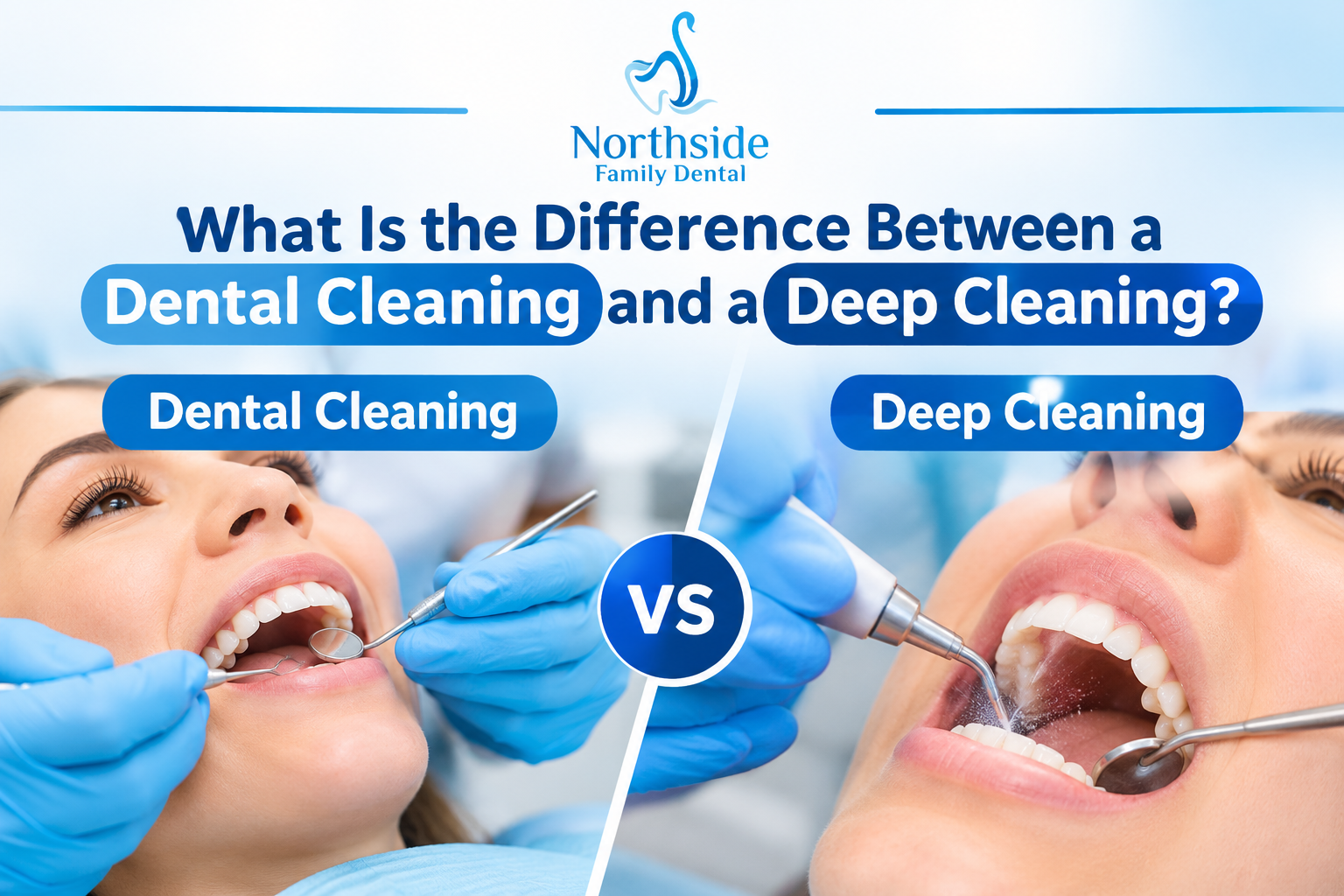
A regular dental cleaning is preventive care that removes plaque and tartar. It cleans at and just below the gumline to keep your gums healthy. A deep cleaning, also called scaling and root planing, treats gum disease. It cleans below the gumline and smooths the tooth roots. Your dentist measures the pockets between your teeth and gums to see which cleaning you need. If the pockets are 1 to 3 millimeters deep, they are considered healthy. Deeper pockets than these numbers may point to a problem.
A regular dental cleaning helps keep gums healthy. A deep cleaning treats gum disease by cleaning below the gumline. The main difference is where the cleaning is done and why you need it. One keeps healthy gums healthy, while the other treats unhealthy gums.
Many patients are surprised when their dentist recommends a deep cleaning instead of their usual six-month cleaning. This guide explains how every cleaning works and how your dentist decides which one you need. You will also learn what recovery feels like and how to care for your gums afterward. This will help you know what to expect at your next visit and feel more comfortable about your dental care.
Difference Between a Dental Cleaning and a Deep Cleaning
A regular cleaning removes buildup at and above the gumline to help prevent dental problems. A deep cleaning treats existing gum disease by cleaning below the gumline and down to the roots. One is for routine care, while the other is for treatment.
Early gum disease can be treated with a professional cleaning and applies when it has not damaged the structures below the gumline. If the pockets between your teeth and gums are too deep, scaling and root planing may be needed instead. The table below compares the main differences between the two.
Feature |
Regular Dental Cleaning |
Deep Cleaning (Scaling and Root Planing) |
| Main goal | It prevents cavities, stains, and early gum irritation | This treats active gum disease and infected pockets |
| Where it cleans | At and above the gumline | Below the gumline, down to the tooth roots |
| Gum pockets | Healthy, about 1 to 3 mm | Deeper pockets, often more than 4 mm |
| Numbing | Usually not needed | Often uses local anesthesia |
| Visits | Usually one short visit | May take more than one visit |
| Follow-up | Typically every six months | Closer follow-up and maintenance as advised |
What Happens During a Regular Dental Cleaning?
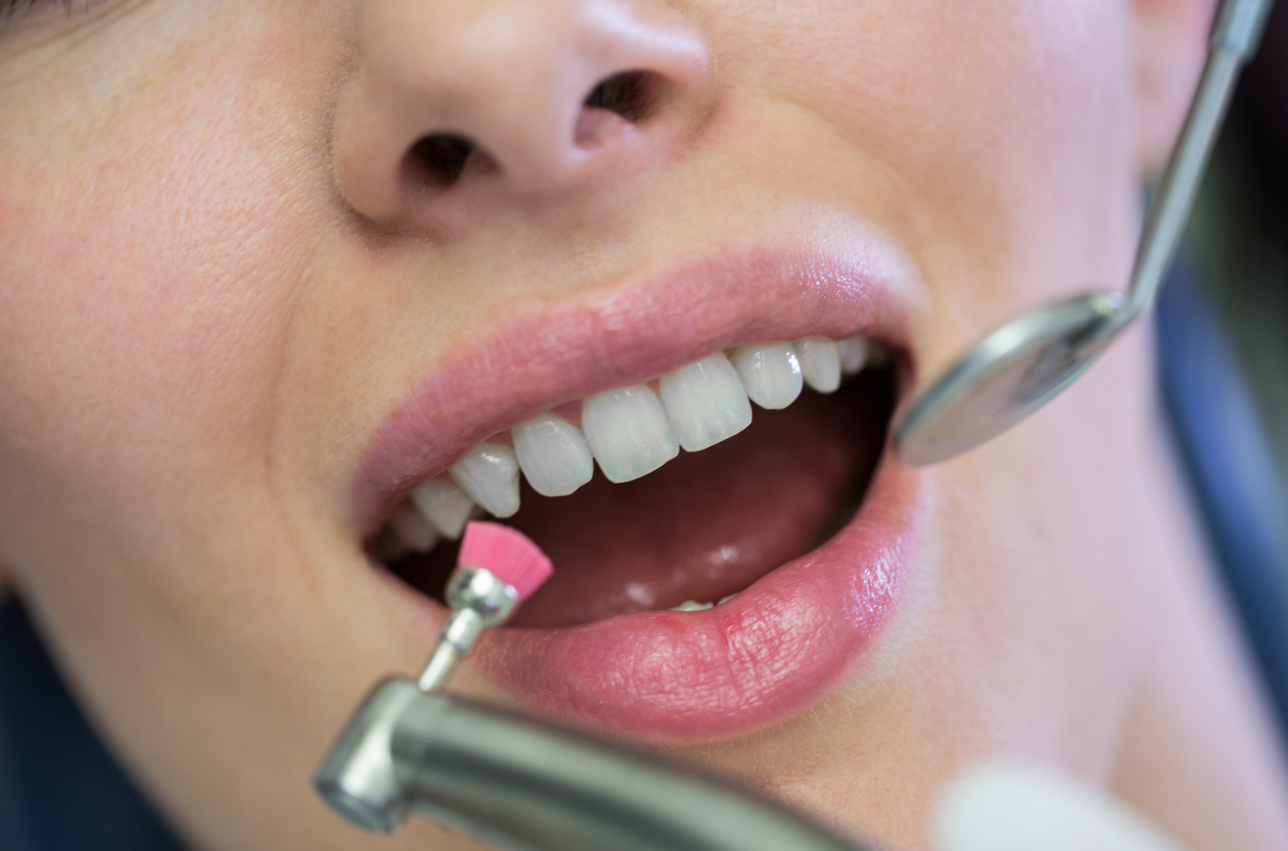
During your regular cleaning, your dental hygienist uses small scalers to remove hardened tartar that brushing cannot remove. They will then polish your teeth to remove surface stains. Many patients do not need numbing because the cleaning is done above the gumline. Because a regular cleaning is preventive, you should have it done regularly, and your dentist can recommend a schedule, usually every six months.
When you keep up with regular cleanings, your hygienist removes plaque and tartar before it builds up too much. This routine also helps your dentist catch small problems early, such as gingivitis or a new cavity. The best thing about these visits is that you can ask your hygienist any questions about your dental health, including brushing and flossing. A few small changes at home can make your next visit easier. If your gums are healthy and the pockets are shallow, a regular cleaning is usually enough.
What Happens During a Deep Cleaning?
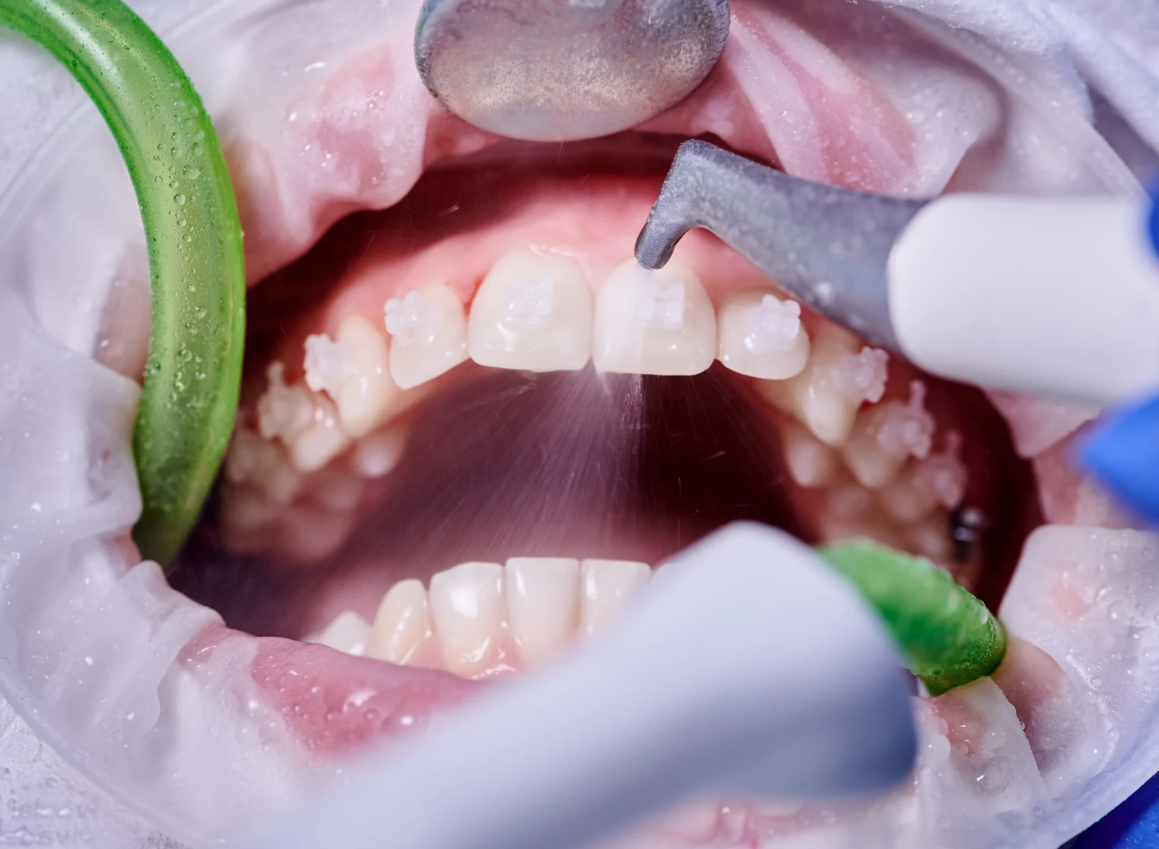
A deep cleaning removes plaque, tartar, and bacteria from below the gumline. It also smooths your tooth roots so your gums can heal and reattach. There are two steps: scaling and root planing.
First, your provider uses a local anesthetic to numb your gums. This deep cleaning usually takes 1 to 2 hours, and you can do it in one visit or split it into two appointments, with half your mouth treated at each visit. Scaling can be done with hand tools, a laser, or an ultrasonic device. Smoothing the roots also helps prevent new buildup and allows the gums to reattach.
Scaling
During scaling, the hygienist removes tartar and bacteria from the tooth surfaces and the pockets beneath your gums. Because the buildup is hard to remove and sits deep below the gums, numbing helps keep you comfortable. Your hygienist or dentist treats one section of your mouth at a time. That is why some patients need a second visit to treat the other side.
Root Planing
Root planing smooths the rough areas on your tooth roots. When the roots are smooth, bacteria have a harder time sticking to them, giving your gums a better chance to heal and tighten. Your dentist will check how your gums are healing at the follow-up visit.
How Do You Know Which Cleaning You Need?
Your dentist uses a small probe to measure the pockets around each tooth. The depth of these pockets helps determine which type of cleaning you need. Deeper pockets may signal gum disease.
A probe is a tiny ruler used to measure gum pockets. In a healthy mouth, these pockets are usually 1 to 3 millimeters deep. Pockets deeper than 4 millimeters may signal periodontitis. Those deeper than 5 millimeters are difficult to clean with routine care. Your dentist may also take X-rays to check for bone loss. The ADA warns that untreated gum disease can lead to bone and tooth loss. You may need a deep cleaning if you see these signs:
- Your gums bleed when you brush or floss.
- Your gums look red, swollen, or feel tender.
- You have bad breath that does not go away.
- Your gums pull away from your teeth, or your teeth feel loose.
Gum disease is common. But only a dental exam can confirm which cleaning you need. So getting treatment early is usually easier than waiting. Don’t ignore bleeding gums, even if they do not hurt.
What Should You Expect After a Deep Cleaning?
After a deep cleaning, your gums may feel sore for a day or two, and your teeth may be sensitive for up to a week. Your gums may feel swollen or tender, and you may notice slight bleeding at first. If chewing feels uncomfortable, we always suggest sticking to soft foods for a day or two.
After cleaning, your dentist will schedule a follow-up visit to check how your gums are healing and measure the pockets again. Good home care also helps prevent gum disease from returning. This means brushing twice a day with a soft-bristled toothbrush and cleaning between your teeth daily. Also, eat a balanced diet and avoid tobacco.
If your gum pockets improve, you will move to regular maintenance visits, and your dentist will recommend how often you need them. If the pockets remain deep, you may need further treatment. This may include medication placed directly into the pockets.
Frequently Asked Questions
Does a deep cleaning hurt?
Your gums are numbed before the procedure. You may feel sore for a day or two, and some sensitivity can last up to a week.
How long does a deep cleaning take?
According to the Cleveland Clinic, a deep cleaning usually takes one to two hours. It may also be split into two visits.
How do I know if I need a deep cleaning?
Your dentist measures the pockets around your gums to see their depth. Deeper pockets, bleeding gums, and bone loss on X-rays are common signs that you may need a deep cleaning.
Can a regular cleaning treat gum disease?
This works only in early cases. According to the Mayo Clinic, routine cleaning cannot reach deep pockets effectively.
How often should I get a regular cleaning?
Usually every six months. But your dentist may suggest a different schedule.
Final Thoughts
A regular dental cleaning helps prevent problems above the gumline. A deep cleaning treats gum disease below the gumline. Your dentist measures the depth of your gum pockets to decide which cleaning you need. Good home care also helps maintain the results. If your gums bleed, feel sore, or look swollen, don’t wait until your next routine visit to have them checked. At Northside Family Dental, we can check your gums and suggest the right care. Schedule your consultation with Northside Family Dental today.

Northside Family Dental



Northside Family Dental
Trusted Family & General Dental Care in North Lakeland, FL
Schedule an Appointment