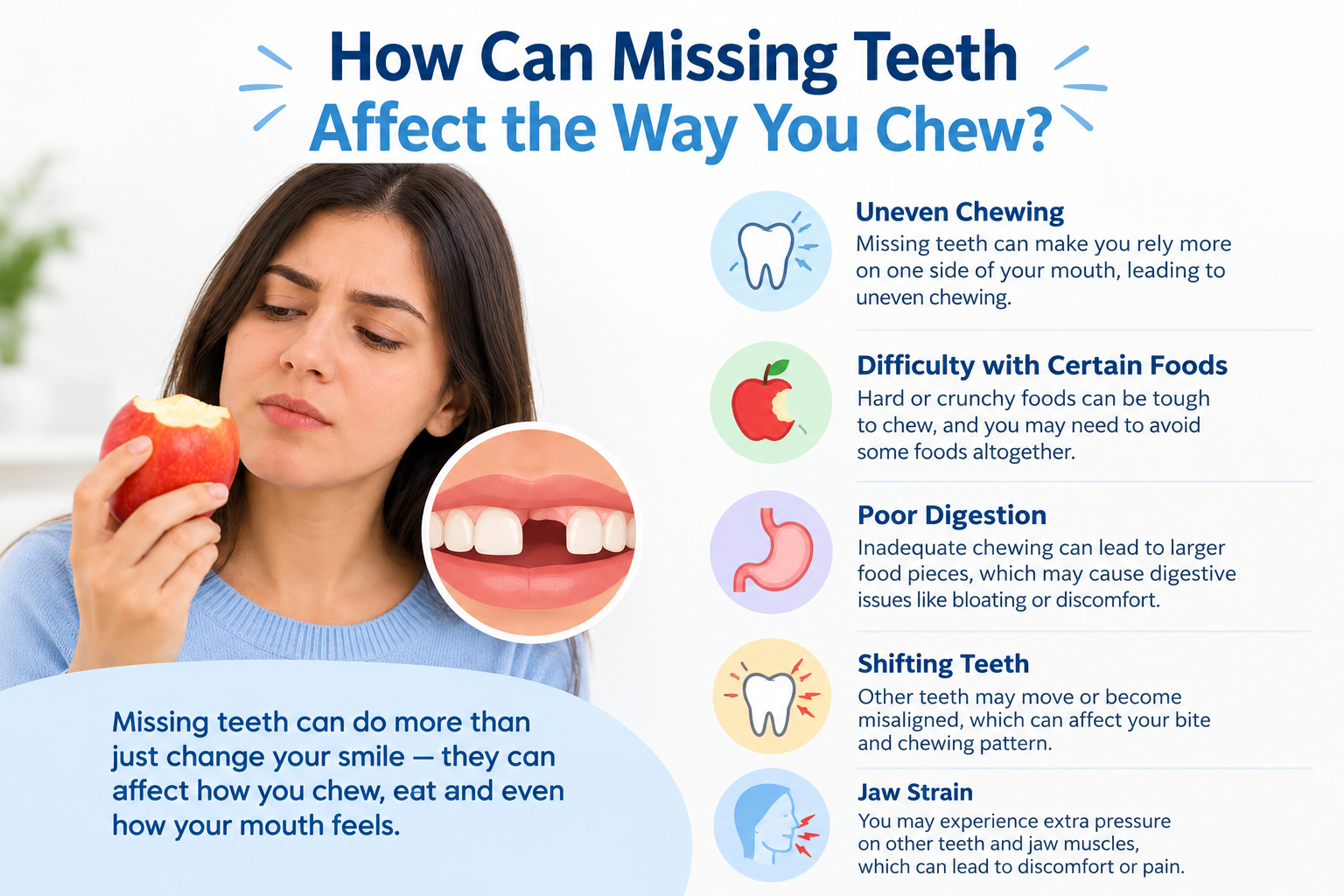
Missing teeth remove the surfaces that cut and grind food, which ultimately makes chewing more difficult. Many people chew on one side, which prolongs meals and puts additional strain on the remaining teeth. Over time, the jawbone may shrink, neighboring teeth may shift, and dietary options may also narrow.
Missing teeth make chewing more difficult because fewer teeth are left to cut, tear, and grind your food. Even one missing molar can slow down eating. It can also put more pressure on the teeth beside it.
The American Dental Association also notes that missing teeth can cause the remaining teeth to shift and lead to bone loss. In this article, we will discuss how tooth loss changes your bite, why you may favor one side, and how it affects your food choices. We also discuss what happens to neighboring teeth and how to regain your ability to chew.
Why Do Missing Teeth Make Chewing More Difficult?
Missing teeth make chewing more difficult because you have fewer surfaces that crush and grind food. Molars do most of this work. According to the ADA, a missing molar directly affects how you chew. With fewer contact points, you may have to chew longer and harder to achieve the same result. Additionally, food may get stuck in the gap, which can irritate the gums and make eating painful. This issue is also more common, as ADA research shows that the average adult between 20 and 64 has three or more decayed or missing teeth.
How Can Tooth Loss Change the Way You Bite and Chew?
Tooth loss changes your bite by disrupting the balance between your upper and lower teeth. The remaining teeth share the burden of the missing tooth. As a result, they can feel sensitive, tired, or worn down quickly. It can also cause your jaw to close slightly differently to avoid the gap. These small changes often happen without you noticing. Many people can notice this problem when chewing becomes uncomfortable. So chewing requires teamwork; each lost tooth affects the whole team.
Can Missing Teeth Cause You to Favor One Side of Your Mouth?
Missing teeth frequently cause people to chew mostly on the other side. This typically happens without realising it. Your brain naturally avoids the gap or any sore gums, so the habit forms quietly. But chewing consistently on one side can create new problems. But there are some common signs that you shouldn’t ignore:
- Food continues to pack into the vacant area
- You can feel tired on one side of your jaw after eating.
- Teeth on your working side feel sensitive or seem more worn.
How Does Missing Tooth Structure Affect the Jawbone?
A missing tooth can lead to jawbone loss. It happens because the bone no longer receives stimulation from a tooth root. The ADA confirms that bone loss can occur around a missing tooth. This change is slow, but it can make later treatment more complex. Furthermore, the problem grows with more missing teeth. The CDC found that 12.9% of U.S. adults aged 65 and older had lost all their natural teeth in 2015 to 2018, which shows how far tooth loss can progress.
Can Difficulty Chewing Affect the Foods You Choose to Eat?
Chewing issues frequently push people toward softer foods. People tend to avoid raw vegetables, nuts, and tough meats. Complete tooth loss can limit food choices and lead to a poor diet. You need to avoid the following:
- Don’t eat fresh fruits and crunchy vegetables.
- Avoid steak, chicken, and other chewy proteins.
- Must avoid nuts, seeds, and crusty bread.
Over time, a softer diet can remove beneficial fiber and nutrients. So you need to fix chewing issues as soon as possible.
What Happens to the Surrounding Teeth After One Tooth Is Lost?
Nearby teeth tend to shift or drift into the space, which further disrupts your bite. According to the ADA, your remaining teeth may shift after a tooth is lost. Similarly, the tooth opposite the gap can gradually shift toward it because nothing is there to stop it. In other words, new gaps and tight spots form, trapping food in your teeth. These changes can make cleaning more difficult and chewing less comfortable. If you fix them early, it can often keep the problem from spreading to other teeth.
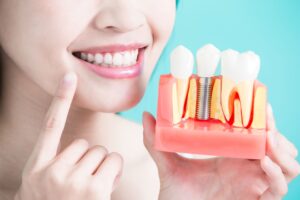
Which Tooth Replacement Options Can Restore Chewing Function?
Dental bridges, partial dentures, and dental implants can all help restore chewing function. The best option depends on how many teeth are missing and how healthy your gums and bone are.
Since every mouth is unique, your dentist should evaluate your bone and gum health first. They can also explain which option is best for your needs.
Frequently Asked Questions
Can you chew normally with one missing tooth?
Several people manage, but chewing is frequently less efficient. This is especially with a missing molar.
Why is it harder to chew after losing a molar?
Your primary grinding teeth are molars, so losing one removes a crucial surface for breaking down tougher foods.
Can missing teeth change your bite?
Yes, neighboring teeth may shift. This can make your bite uneven over time.
Can missing teeth cause problems with other teeth?
Yes, remaining teeth require extra pressure. It may drift, wear faster, or trap food.
What is the best way to replace a missing tooth?
It depends on your bone, gums, and budget. Your dentist can compare bridges, partial dentures, and implants with you.
Conclusion
Missing teeth make chewing more difficult and shift your bite. It can cause jawbone loss and limit your food options. Nearby teeth can also drift into the gap and strain your bite. You’ll be glad to know that bridges, partial dentures, and implants can restore much of your chewing function.
If you treat them early, you can protect your teeth, bite, and comfort. If a gap is making eating difficult, we are always ready to help at Northside Family Dental. Schedule a consultation today, and we will guide you to the best option for your smile.
Northside Family Dental
Northside Family Dental
Trusted Family & General Dental Care in North Lakeland, FL
Schedule an Appointment