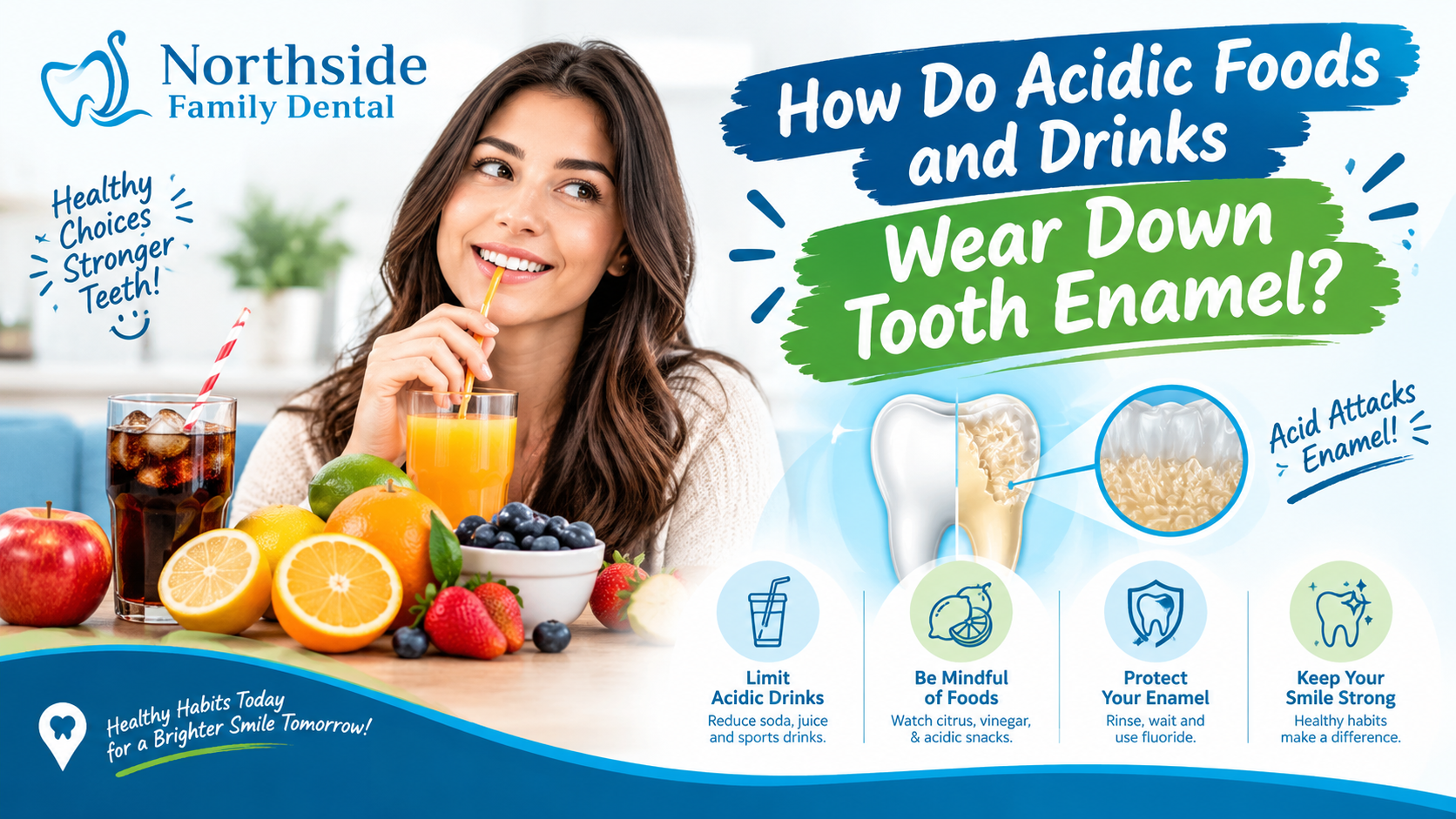
Acidic foods and drinks can wear down tooth enamel through a process called demineralization. During this process, acids pull calcium and phosphate minerals from your enamel. This temporarily softens and thins the surface.
When you regularly consume citrus fruits, soda, wine, and other acidic foods, the damage can build up over time. And the enamel cannot grow back once it’s gone. The thinning can become permanent. But not all acidic foods and drinks are fully harmful to your teeth. How you eat them also matters, whether you sip slowly or drink quickly. Understanding how this process works can help you enjoy acidic foods without causing lasting damage to your teeth.
What Happens to Tooth Enamel When It Comes Into Contact With Acid?
When acid touches your teeth, it softens your enamel and strips away minerals. Your enamel is mostly made of hydroxyapatite. This hard mineral contains calcium and phosphate. When acid hydrogen ions reach your teeth, they react with these minerals and remove them from the enamel. It can happen within minutes when you eat or drink something acidic. So even short exposure to acid can weaken your enamel for a while.
Enamel generally starts losing minerals when your mouth’s pH drops below about 5.5. Dentists often call this threshold the critical pH. Below that point, acid pulls minerals out faster than saliva can replace them. And the enamel stays softened until your mouth’s pH rises back above that level. With enough time between acidic exposures, saliva can usually help the enamel recover on its own, which is why both the strength and frequency of acid exposure matter.
Which Foods and Drinks Are Most Likely to Cause Enamel Erosion?
Citrus fruits, soda, wine, and vinegar-based meals can wear down your enamel. They are highly acidic and have a low enough pH to cause demineralization. When you eat citrus fruits such as lemons, limes, oranges, and grapefruits, their citric acid can affect your enamel. Sodas, especially sugar-free ones, have acids like carbonic or phosphoric acid, which give them their fizz. You will also see a lot of acid in sports drinks, energy drinks, and vinegar-based pickles. They can similarly affect your enamel.
Food or Drink Category | Examples | Main Acid Involved |
| Citrus Fruits & Juices | Lemons, limes, oranges, grapefruits | Citric acid |
| Carbonated Drinks | Regular and sugar-free sodas | Carbonic and phosphoric acid |
| Wine | Red and white wine | Tartaric and other fruit acids |
| Sports & Energy Drinks | Sports drinks, energy drinks | Citric and phosphoric acid |
| Vinegar-Based Foods | Pickles, vinaigrettes | Acetic acid |
How Can Frequent Sipping of Acidic Drinks Increase Enamel Damage?

If you keep drinking acidic drinks, your enamel stays exposed to acid longer. This gives your saliva less time to neutralize the acid and helps reharden your enamel between sips. This means that if you drink a soda slowly over an hour, your teeth are constantly exposed to acid. It can cause more demineralization than just drinking it fast. During the day, sipping acidic drinks can damage your enamel more than drinking them with a meal.
With every sip, your enamel has less time to heal. So, drinking slowly over hours can do more harm than drinking it in 10 minutes. Using a straw or finishing an acidic drink in one sitting can reduce how long your enamel is exposed to acid. That’s why it is better to sip the same drink for hours.
What Are the Early Signs of Acid Erosion on Your Teeth?
- You may feel tooth sensitivity to hot, cold, or sweet foods when acid erosion starts.
- Your teeth may also look slightly yellow or dull as the enamel wears down.
- They may even feel rough rather than smooth.
- Some people also notice small indentations forming on the chewing surfaces of their teeth. The edges can look more transparent than the rest of the tooth.
Because erosion happens slowly, these signs can be easy to miss. You may not notice them until your dental checkup. So, a dentist can often spot early erosion before you notice any signs. That is why regular dental visits matter, even if your teeth feel fine. The early finding of erosion improves your chances of slowing it down. This can help avoid serious sensitivity or visible damage.
How Can Saliva Help Protect Teeth From Acid Attacks?
Saliva protects your teeth from acid attacks by neutralizing acids and washing away food particles. Because it contains calcium and phosphate minerals, saliva helps your enamel harden again after acid exposure. This natural process is known as remineralization. This is the reason enamel can recover from mild acid exposure if there is enough time between exposures.
People who produce less saliva can lose enamel more quickly. This can be due to medications, dehydration, or health issues. According to the American Dental Association, saliva usually needs 30 to 60 minutes to neutralize acid after an acidic exposure, which begins the remineralization process. Because of that, the timing of behaviors like brushing your teeth matters. Staying hydrated can help your body’s natural defenses. Chewing sugar-free gum can also help improve saliva flow.
What Can You Do to Protect Your Enamel After Eating or Drinking Acidic Foods?
After eating or drinking something acidic, rinse your mouth with plain water right away. Before brushing your teeth, let your saliva harden the softened enamel for at least 30 to 60 minutes. If you brush too soon, you may wear away some of the softened enamel and not protect it. When drinking acidic beverages, use a straw or pair them with dairy products like cheese or milk. Dairy contains calcium, which can help neutralize the acid.
Frequently Asked Questions
What foods are highest in acid and most harmful to enamel?
More acidic options include citrus fruits such as lemons and limes, carbonated sodas, wine, and foods made with vinegar. They can also harm your enamel. Sports and energy drinks can be highly acidic. Even though they are usually marketed as healthy options, they can still harm your enamel.
Does drinking soda every day damage tooth enamel?
Drinking soda daily may keep your enamel exposed to acid. Over time, this might cause visible erosion, especially if you sip it slowly during the day. You can reduce the damage by drinking acidic drinks less often. Using a straw and then rinsing with water can also help.
Can lemon water erode tooth enamel?
Lemon water can wear down your tooth enamel because lemons have citric acid. This can happen even if you dilute the lemon in water. If you drink it with a straw, you can reduce the impact. Then rinse your mouth with plain water.
Should you brush your teeth immediately after drinking something acidic?
It is better to wait before brushing after having something acidic. Your enamel is temporarily softened, and brushing right away can wear it down even more. Wait 30 to 60 minutes before brushing. This gives your saliva time to re-harden your enamel.
Can damaged tooth enamel grow back?
Once tooth enamel is gone, it cannot grow back. This is because enamel has live cells that can repair or regrow it. Saliva can be used to heal mildly softened enamel. However, it cannot restore worn enamel.
How can you tell if you have enamel erosion?
When your enamel wears down, you may experience more tooth sensitivity. Your teeth may also look yellow or dull, with rounded or less-defined edges. During a routine visit, a dentist can easily detect enamel erosion. They might see it before you have any symptoms.
Final Thoughts
Acidic foods and drinks can slowly wear down your tooth enamel, a process known as demineralization. This is because enamel can’t recover once it is gone. It is better to avoid the damage than try to treat it later. You can protect your enamel with some simple habits. Rinse with water, wait before brushing, and eat acidic foods that have dairy to help prevent future harm.
At Northlake Land Dentist, we examine your enamel for early signs of erosion. We also help you make small changes to your daily routines before the damage is permanent. Schedule your consultation with us today for an enamel checkup.
Northside Family Dental
Northside Family Dental
Trusted Family & General Dental Care in North Lakeland, FL
Schedule an Appointment